Natural PCOS Solutions Blog
This blog gives you:
- Answers to your questions about PCOS, ovarian cysts, polycystic ovaries, weight loss, hirsutism, hair loss, infertility, acne, hyperinsulinsm, hormone imbalances, and more.
- Natural ways to deal with PCOS, including nutritional supplements, lifestyle, and dietary tips.
- Holistic physician's analysis and review of relevant health issues and alternative medicine treatment options.
- Immediate access to new in-depth feature articles and updated information posted to this site.
- The latest research on polycystic ovary syndrome and infertility.
If you're not sure what a blog is or how to add this blog to your blog reader, click the "What's an RSS feed?" button on this page, just under the orange "RSS/XML" button.
Is D-Pinitol Anti-Inflammatory and Anti-Cancer?
D-pinitol is becoming increasingly well known among PCOS women for its role in reducing insulin resistance and normalizing blood sugar problems.
A new report from the University of Texas has shown that d-pinitol also has anti-inflammatory properties.
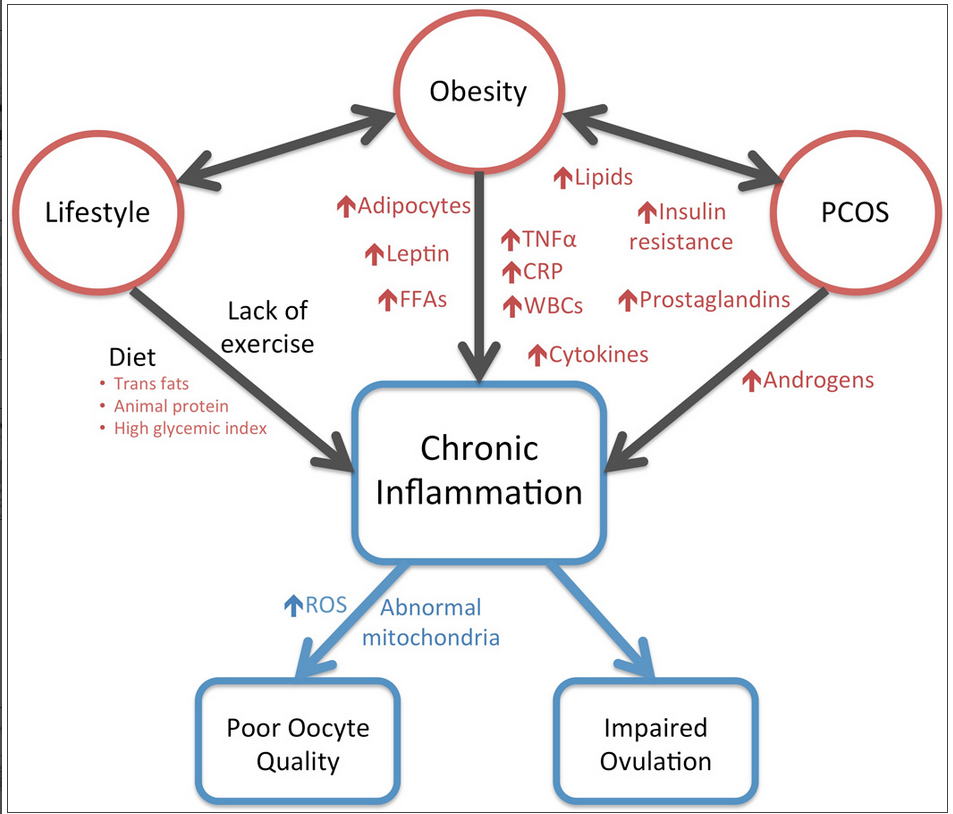
This is important because women with polycystic ovary syndrome are more likely to have chronic inflammation.
As discussed in Section 16 of this PCOS diet e-book, there is a vicious linkage between body fat, inflammation, insulin resistance and leptin resistance. This is one reason why PCOS is so challenging to manage. In addition, chronic inflammation plays a role in cardiovascular disease, diabetes and cancer.
A research report from the University of Texas has shown that d-pinitol suppresses an inflammatory pathway in the body called NF-kappaB. Suppression of NF-kappaB not only suppresses inflammation but also appears to make normal cells less likely to turn into cancer cells.
Sad about PCOS -- What Can I Do?
I am 23. I have a three year old son and am married. Just bought a house and want to have another child so bad. We have been trying for two years.
Permalink -- click for full blog post "Sad about PCOS -- What Can I Do?"
Not Sure I Have PCOS
Hi, I was diagnosed with PCOS in February 2010. I again had another ultrasound of my pelvis three months ago and it said I have no PCOS. But, I still
Permalink -- click for full blog post "Not Sure I Have PCOS"
Have PCOS, Frustrated with Metformin, Clomid
My name is Cassie. I am 24 years old and have been trying to conceive for a year and a half. I was diagnosed with PCOS about 6 months ago. After several
Permalink -- click for full blog post "Have PCOS, Frustrated with Metformin, Clomid"
My PCOS Struggles
I'm 28 and have been diagnosed with PCOS for the last 1 1/2 years. I had been on BC for years, kept quite thin and was only off the pill for 6 weeks
Permalink -- click for full blog post "My PCOS Struggles"
Are Some PCOS Women Starved for Oxygen?
PCOS news: Vitamin D deficiency epidemic among teens. Are PCOS women starved for oxygen? Brown rice vs. white rice.
Permalink -- click for full blog post "Are Some PCOS Women Starved for Oxygen?"
Vitex (Chasteberry) Herb for Improving Infertility, PCOS, and Ovarian Cysts
For PCOS and infertility, vitex agnus castus (chasteberry) may be helpful. It has been used for centuries to increase fertility and improve menstrual cycles. Discover the evidence for vitex.
PCOS and Weight Loss Problems Treated with Xenical or Meridia
Women with PCOS -related obesity or weight problems may be treated with orlistat (Xenical) or sibutramine (Meridia). But the healthiest weight loss methods are healthy diet and exercise.
PCOS Symptoms such as Infertility and Obesity Helped by Multi-Vitamin-Mineral Dietary Supplements
PCOS symptoms such as infertility, insulin resistance, obesity, hair problems, and lack of energy are helped by a multivitamin nutritional supplement, according to studies.
What to Look for in Nutritional Supplements - Quality Is the Key
Our clinical experience shows that you'll get healthier if you buy the highest quality dietary supplements. There are no standards for quality, so buy wisely. Use our supplements quality guidelines.
Inositol Reduces Acne and Hirsutism
Researchers at the Vita-Salute University in Italy studied fifty women who had PCOS.
The women took supplemental inositol (a B vitamin) for six months to determine its effects on skin conditions such as hirsutism (excess hair) and acne.
After 3 months of taking inositol, they had reduced testosterone and improved insulin function.
In addition, after 6 months on the inositol, they also had significant reductions of both hirsutism and acne.
The researchers concluded: Inositol "…is a simple and safe treatment that ameliorates the metabolic profile of patients with PCOS, reducing hirsutism and acne."
As the researchers say, inositol supplementation is both simple and safe. If taken over the span of half a year, it appears to reduce acne and hirsutism problems.
A good source of inositol is powdered inositol. You can take it as is or mixed into any liquid. It has a bland, mild taste.
PCOS, but Pregnant after 16 years - I attribute it to using a NMDA receptor antagonist
I have had PCOS since I was 16. Back then they didn’t know much about it so I wasn’t diagnosed until I had an ultrasound at age 25. I would have periods
Despite PCOS, Conceiving is possible!
Hi there, I am the proud mother of 2 and was diagnosed 4 years ago with PCOS! My doctor put me on Metformin and both times within months I was pregnant.
Permalink -- click for full blog post "Despite PCOS, Conceiving is possible!"
PCOS, Insulin Resistance & Epilepsy!!
I have read everyone's stories and now I'm in tears!!! I'm so happy for all of you :) Your stories have inspired me to TAKE ACTION!!! I was diagnosed
Permalink -- click for full blog post "PCOS, Insulin Resistance & Epilepsy!!"
Living with PCOS, Trying Provera
Hello everyone. I am 25 years old. I was dx'd with PCOS 2 years ago and have had 2 other opinions since. I have PCOS alright. I guess it makes sense,
Permalink -- click for full blog post "Living with PCOS, Trying Provera"
PCOS: Benefits of Carnitine + Right Diet
PCOS news: Benefits of carnitine + right diet. Is PCOS becoming a worldwide epidemic? You're not smoking--are you?
Permalink -- click for full blog post "PCOS: Benefits of Carnitine + Right Diet"
I have PCOS, feeling like I've let my boyfriend and me down
I found out about a month ago I have PCOS. I was completely devastated and thought there was no chance of me ever conceiving. I am 18 years of age
Permalink -- click for full blog post "I have PCOS, feeling like I've let my boyfriend and me down"
Success over PCOS, Infertility
I was married when I was 20 yrs old and my husband wanted to have kids right away. I used to have some problems with my periods, but I didn't pay attention
Permalink -- click for full blog post "Success over PCOS, Infertility"
Still Suffering from PCOS but No Symptoms?
I am Kaveri Bhar, 23 yr old. It was Jan 2010 when I found that I have PCOS (mild). The doctor put me on the birth control pills. But I do not want to
Permalink -- click for full blog post "Still Suffering from PCOS but No Symptoms?"
Overweight PCOS Women May Have Dark Skin Spots or Skin Tags (acanthosis)
Overweight women with PCOS may have dark, velvety skin patches (acanthosis nigricans). Healthier diet and lifestyle helps to provide relief.
My PCOS
I found out I had PCOS about a month ago. I've been going to the doctors since I was 15 over cramps and the farthest I got was endometriosis, well then
Permalink -- click for full blog post "My PCOS"
Miracle Baby Benjamin
The year before my husband and I were married I was informed that I had PCOS and the doctor (or quack) from the clinic told me I was too fat and that I
Permalink -- click for full blog post "Miracle Baby Benjamin"
Yuor PCOS Stories Give Me Hope. Thank You All!
I am 33 years old, unmarried. I was diagnosed with PCOS. I am not overweight, neither I have any hairy problem (thank god!). I was very, very depressed
Permalink -- click for full blog post "Yuor PCOS Stories Give Me Hope. Thank You All!"
New Hope from This Site
I was diagnosed in 2001 with a cyst in my right side but never had pain, until three months ago. I started bleeding while having sex with my boyfriend
Permalink -- click for full blog post "New Hope from This Site"
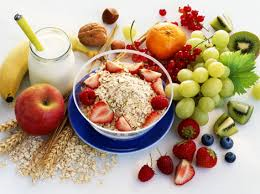
Food Is an Antidepressant
No, we are not talking about so-called comfort foods that lift you up and then let you down. We are talking about whole, healthier foods.
If you feel depressed, read on.
A very interesting study from the University College London in the UK following 3,486 people for five years. At the end of five years, they matched their depression to their diet.
They found that the most depressed individuals consumed processed food (heavily loaded by sweetened desserts, fried food, processed meat, refined grains and high-fat dairy products).
In contrast, the least depressed people consumed a diet of whole foods (heavily loaded by vegetables, fruits and fish).
Depression is a surprisingly common symptom of polycystic ovary syndrome. Before you turn to pharmaceutical antidepressants, take a good look at what you are eating. If you eat a healthy diet as described in this PCOS diet ebook, your depression may subside.
Convenience foods are your enemy. They worsen PCOS problems in all kinds of ways, including depression.
Do Birth Control Pills Get Rid of Polycystic Ovaries?
PCOS commonly includes chronic absence of ovulation, hyperandrogenism (excessively high levels of male hormones), and polycystic ovaries.
Birth control pills are the first thing that doctors typically turn to in an attempt to treat this difficult disorder.
Are birth control pills a cure for polycystic ovary syndrome?
The answer is "no", although contraceptives relieve some of its signs and symptoms.
A recent study from the Erasmus Medical Centre in The Netherlands compared PCOS women who took oral contraceptives to those who did not. The women taking contraceptives had a drop in their male hormones.
However, contraceptives did not alter polycystic ovaries or the size of the ovaries. The rate of polycystic ovaries was the same whether or not women took contraceptives.
Despite taking contraceptives, women still fulfilled the criteria for a diagnosis of polycystic ovary syndrome.
Birth control pills do help to relieve symptoms in many women. However, it's clear that they are not "the answer" to PCOS.
PCOS: Struggled with weight, hair loss & extra hair in the wrong places for 20 years
I am 43 yrs old and live in Vancouver, BC, Canada. I have always been an extremely active person, involved in any kind of sport I could find. I started
Lifestyle Changes for PCOS Gave Me Regular Periods
Hello, my name is Sarah-Jane. I was told I had PCOS on New Year’s Eve, 2005, due to having no periods and my hair falling out. I had gone up 2 dress
Permalink -- click for full blog post "Lifestyle Changes for PCOS Gave Me Regular Periods"
Do You Have PCOS? Your Brother Is at Risk.
As you may know, PCOS is partly an inherited disorder. That is, certain families have a genetic predisposition toward this disorder.
Part of this predisposition is an increased likelihood of developing a condition call "insulin resistance", which is thought by many clinicians to be a primary cause of PCOS.
However, this inherited problem is not restricted to women and girls. Males are also affected, according to research released by the University of Sherbrook in Canada.
The study showed that brothers of women with polycystic ovarian syndrome also had increased insulin resistance and other metabolic problems similar to the women.
PCOS is a family affair that is not restricted to females. If you have a brother, you might have a conversation with him about the possibility that each of you has a similar health challenge.
Visit the Natural Health Solutions for PCOS website for more information about polycystic ovary syndrome.
The PCOS-Thyroid-Progesterone-Infertility Connection
Summary: If your thyroid gland is healthy, your ovarian function will improve!
PCOS is not solely an ovarian disorder. Rather, it's a systemic disorder involving in some way almost every organ, gland and cell in your body. All of your cells are in constant communication with other cells via hormones and a huge array of other signaling molecules. Your body is a complex web of communication and interaction.
To get the best long-term results, you'll want to shift away from thinking in terms of single, simple problems. Or single, simple solutions such as birth control pills or metformin.
It has been said in this ebookand on this site that women with polycystic ovary syndrome also may have thyroid, liver, or adrenal gland problems in addition to ovarian problems. The involvement of fat cells, the immune system and your brain have also been discussed. All of these organs and systems are intimately interconnected.
Take your thyroid gland for example. You may think your thyroid function has little to do with your ovaries. But that is not the case.
Thyroid hormone stimulates progesterone production in your ovaries, thus allowing you to complete your menstrual cycle. You cannot become pregnant unless you have sufficient progesterone to provide a supportive environment in your uterus for the egg.
You may know that women with PCOS and infertility problems commonly have chronically low progesterone. That's one reason why the supplement chastetree berry (vitex) can help with fertility and pregnancy, since it helps the body to create more progesterone.
So a healthy thyroid is a partial solution to more optimal hormone production in your ovaries. Your thyroid also influences production of SHBG (sex hormone binding globulin), prolactin, and GnRH (gonadotropin releasing hormone), all of which affect your cycle and your ability to become pregnant.
So here’s a vital question.
Do you know whether your thyroid gland is working properly? Or whether you have an "invisible" thyroid disease such as autoimmune thyroiditis?
Fish Oil and a Successful Pregnancy
There are dozens of favorable research reports about the consumption of fish or fish oil. Some of these reports suggest that the oils from fish may improve pregnancy outcomes.
A successful pregnancy is an especially important issue for any women with PCOS because of the higher risk of an unfavorable outcome.
Not only are women with PCOS more likely to have a miscarriage, they are also more likely to have pregnancy complications such as gestational diabetes, pregnancy-induced high blood pressure, preeclampsia, or a preterm birth. Their babies are also more likely to end up in intensive care or possibly die.
Fortunately, there are things you can do to improve your odds. Of course, what you eat greatly influences how your pregnancy will turn out.
One of the items in your diet is fish. A recent study of 8,729 Danish women showed that those who ate no fish had a 19-fold increased risk of preterm delivery compared to those women who regularly ate fish. In other words, fish consumption drastically reduced the risk of a preterm birth.
The Danish study was supported by another study of 2,398 pregnant women in Brittany, France. In this study, fish consumption as associated with increased length of gestation.
However, the researchers drew an interesting distinction between fish and shellfish. While fish consumption reduced the risk of preterm birth, shellfish consumption resulted in reduced fetal growth. It appears that eating shellfish on a regular basis may contribute to having a smaller baby.
OK, eating fish and avoiding shellfish while pregnant sounds like a good idea. But what about the mercury and all those other pollutants found in fish?
Purified fish oil may be a good alternative. Read more here.
Mothers of PCOS Daughters Have Heart Risk
Are you the mother of a daughter who has PCOS?
The attention of the medical profession and the medical research is focused on your daughter, a younger female.
But what about you?
An interesting study was recently released from Virginia Commonwealth University. 308 women with PCOS were interviewed about their mothers' medical history. Their mothers were also interviewed (if still alive) to determine whether they also had PCOS and also had a cardiovascular event such as a heart attack.
The researchers concluded: "PCOS-affected mothers of women with PCOS have a higher risk for cardiovascular events in comparison with non-PCOS mothers, and cardiovascular events appear to occur at an earlier than expected age in mothers with PCOS."
That is, if you (the mother) had PCOS or major symptoms of PCOS, you have a higher risk for cardiovascular problems, and they are more likely to occur earlier in your life as compared to mothers who did not have PCOS.
Menopause is not a protection because most of the mothers in this study were post-menopausal.
The consequences of polycystic ovary syndrome do not simply "disappear" because you are older.
We appreciate your concern about your daughter's health. Just don't forget to take good care of yourself too!
Eat a healthy diet. Remove sources of stress. Get lots of exercise. And enjoy life!
This article and others are available to subscribers of The PCOS Health Review newsletter.
Permalink -- click for full blog post "Mothers of PCOS Daughters Have Heart Risk"
Hate Your Hair? Blame Your Mother's Diet
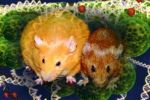
Studies from Duke University are demonstrating that "you are what you eat", scientists have reported they have changed the fur colors of baby mice simply by altering their mothers' diets.
They changed the color of baby mouse fur by feeding pregnant mice four nutritional supplements.
Mice given the supplements gave birth to babies with predominantly brown coats. Pregnant mice not fed the supplements gave birth mostly to babies with yellow coats.
The study shows that common nutrients can influence which genes turn on and off in a developing fetus, and help explain some of the factors that decide which genes are expressed and which remain silent.
The researchers noted, "We have long known that maternal nutrition profoundly impacts disease susceptibility in their offspring, but we never understood the cause-and-effect link. For the first time ever, we have shown precisely how nutritional supplementation to the mother can permanently alter gene expression in her offspring without altering the genes themselves."
There is much support for the idea that nutrition can affect genetic expression in people. Several studies have shown, for example, that women who eat a poor diet while pregnant have children who grow up with a tendency to diabetes and heart disease.
Here are your three takeaways from recent medical research, regardless of whether you have polycystic ovary syndrome:
1. What you eat will profoundly influence your future health.
2. What your mother ate with you in her womb has profoundly influenced your past and present health -- and will influence your future health.
3. If you plan to become a mother, what you eat at conception and during early pregnancy will profoundly influence your child's future health.
Improving your diet is arguably the most important thing you can do to change the outcome of your health problems.
In addition, your diet will have tremendous implications for your own future children.
The issue of what to eat and drink is so important that a diet e-book was written specifically for women with PCOS and infertility problems in order to provide the kind of high quality nutrition helpful for optimizing their genetic expression.
Homeopathy has reduced some PCOS symptoms
Hi, My name is Mangala and I belong to India. I recently got married and have started worrying about having kids in the near future. I had been diagnosed
Permalink -- click for full blog post "Homeopathy has reduced some PCOS symptoms"
Women with PCOS May Have Bacterial Infection
Not too many years ago stomach ulcers were a mystery. No one knew the cause.
It's now commonly accepted that ulcers are caused by a bacteria called H. pylori. Even though H. pylori is a common infection that doesn't always produce symptoms, it can become a health problem.
Surprising research from Adnan Menderes University in Turkey has now associated H. pylori with polycystic ovary syndrome.
In this study, 35 women with PCOS were compared to 50 non-PCOS women. They were evaluated for H. pylori antibodies in the blood.
Forty percent of the PCOS women showed evidence of exposure to H. pylori vs. only 22% for other women. In other words, the rate of exposure to H. pylori in women with PCOS was nearly double the rate for other women.
Why PCOS women may have a higher exposure or higher infection rate is not known. Whether H. pylori might in some way contribute to polycystic ovary syndrome problems is a mystery. We'll have to await further research. This new H. pylori research is nothing to be alarmed about but is something to be aware of.
Meanwhile, what might you do, if anything?
You could consume antioxidant nutrients, either as part of a healthy diet, or as supplements.
When vitamins C and E are given in addition to antibiotics, the eradication rate of H. pylori is significantly higher than when using antibiotics alone.
The antioxidant nutrient n-acetylcysteine (NAC) has also been reported to help eradicate H. pylori. In addition, NAC may improve your fertility as well as reduce insulin resistance in women who have PCOS, according to research studies. Insulin resistance is a major cause of polycystic ovarian syndrome.
Dry Eyes a Symptom of PCOS
A couple of recent research studies are showing a link between polycystic ovary syndrome and "dry eye" symptoms.
There are specialized glands at the rim of your eyelids that supply an oily substance to prevent evaporation of the protective tear film covering your eyes. The oily substance prevents tear spillage onto the cheek and makes the closed lids airtight. There are roughly 50 glands on the upper eyelids and 25 glands on the lower eyelids.
In these studies, PCOS women had more symptoms of dry eye, itching, blood congestion, mucous discharge, and irritation with contact lenses. It is thought that hormonal imbalances are causing the eye glands to malfunction.
So if you have dry eye problems, you can use eye drops. But eye drops will not solve the problem. You will need to find ways to rebalance all of your hormones.
The best long-term way to rebalance hormones is to improve your diet, get more exercise, and reduce chronic stress. (This e-book provides guidelines for these three important steps).
PCOS is not just a problem with your ovaries. Many organs and glands in your body are involved. Take steps today to improve your overall health. Doing so will help to clear up diverse symptoms related to polycystic ovarian syndrome, including dry eyes.
PCOS Pregnancy Problems - New Cause Revealed
PCOS news: Got milk? --Get acne! Pregnancy problems--New cause revealed. Are you rushing through life?
Permalink -- click for full blog post "PCOS Pregnancy Problems - New Cause Revealed"
PCOS: Cinnamon Extract Reduces Blood Sugar Levels
Women who have PCOS are likely to have problems with maintaining normal levels of blood sugar and insulin.
Thames Valley University in the UK recently reviewed eight clinical trials regarding the use of cinnamon for diabetes or insulin resistance, which is a blood sugar and insulin disorder.
In both diabetics and non-diabetics, cinnamon was found to lower blood sugar levels or dampen the rise in blood sugar after eating a meal. However, some of the studies were inconclusive.
A new study of rats by the USDA has shown that cinnamon favorably helps to regulate the genes involved in insulin resistance and creation of fat.
Recent evidence indicates that cinnamon extract can be helpful if you have issues with blood sugar, insulin resistance or being overweight.
Insulin resistance is the inability to efficiently utilize the hormone insulin. Insulin resistance is thought to be the primary cause of most cases of polycystic ovary syndrome.
You can add cinnamon to your food but if you're looking for a better effect, a highly concentrated cinnamon extract is suggested.
PCOS: A Different kind of Success!
As I read through these success stories my heart aches a little for all those who have to endure the symptoms and for all the happy pregnancies out there.
Permalink -- click for full blog post "PCOS: A Different kind of Success!"
Overweight and Have PCOS? Brisk Walk Will Do Wonders!
Having polycystic ovary syndrome is problem enough. But when you're overweight, the whole thing can be depressing.
Fortunately, University College in London discovered a tactic that can help you feel better about yourself.
They put 35 overweight women with polycystic ovary syndrome on a program of brisk walking for six months.
At the end of six months, 23 women showed up for a reassessment; 12 had completed their exercise program and 11 did not. After the six months, the women who had stayed with their walking program had a much more positive perception of their bodies than did the women who gave up.
Interestingly, neither group lost much weight. But by simply developing the habit of taking a brisk walk every day, the women significantly improved their self-perception.
If you're not involved in a regular exercise program, why not just take a brisk 20-minute walk every day? It will be great for your self-esteem -- and you'll be healthier too!
Is Cardiovascular Disease Your Hidden PCOS Time Bomb?
Has your doctor talked with you lately about the relationship between PCOS and the risk of developing cardiovascular disease?
There is plentiful medical research to establish that women with polycystic ovary syndrome have a higher risk of developing heart and blood vessel disease.
We bring this up now because we just came across yet another study that demonstrates your increased risk.
The University of Adelaide in Australia has reported that women with PCOS have abnormal platelet function compared to women who don't have PCOS.
Platelets are primitive cells in your bloodstream that control blood clotting. They also send out powerful biochemical signals that alter many functions in your body. Some of these biochemicals can create problems.
The Australian researchers compared 12 lean and 12 overweight PCOS women to 12 women who did not have PCOS.
Both the lean and overweight PCOS women had disturbed platelet function when compared to the normal women. In fact, they titled their report: "Polycystic ovary syndrome is associated with severe platelet and endothelial dysfunction in both obese and lean subjects."
They conclude: "We conclude that in PCOS subjects, independent of obesity and associated insulin resistance, profound and reproducible impairment of platelet responsiveness to NO [nitric oxide] is an additional component of cardiovascular homeostatic disturbance."
It's uncommon to find a research report that uses the words like "severe" and "profound". Without going into all the medical-technical details, suffice it to say that platelet dysfunction is a clear risk for various kinds of cardiovascular problems, to say nothing of other disturbances such as systemic inflammation.
OK, so maybe you have a platelet problem. What might you do about it?
First, if you're taking birth control pills, you could ask your doctor if there is any relationship between birth control pills and your platelets. A research report from the Universidad de Alcala in Spain said: "Oral contraceptives and metformin may exert deleterious effects on blood clotting tests of PCOS women."
Second, a healthy diet, like the one described in The Natural Diet Solution for PCOS and Infertility e-book, is supportive of your cardiovascular system. For example, it's recommended that nuts be part of your diet. A recent study from the Universidad Complutense de Madrid in Spain showed that platelet function was improved when walnut paste was added to meat. Don't be afraid of walnuts or other nuts because you think they are "fattening". Actually, they are quite healthy (if raw).
Third, selected nutritional supplements such as fish oil may be beneficial. Fish oil components can help to normalize platelet function and has other heart-healthy benefits, according to research at Oxford University and other sources.
The cardiovascular risk of PCOS is not something to be swept under the rug. Your best strategy is to start right now to reduce your risk. Remember, the absence of obvious symptoms do not mean you are free of risk.
Success in My Struggle with PCOS
I was diagnosed with PCOS at age fifteen. When I first found out, I was upset because my doctor told me that I would never be able to have children.
Permalink -- click for full blog post "Success in My Struggle with PCOS"
So Far So Good - But What about Wheat in the PCOS Diet?
Hello... Like every one else, I was so depressed for a long time, not knowing what's causing me this weight. I am an Indian... recently got married
Permalink -- click for full blog post "So Far So Good - But What about Wheat in the PCOS Diet?"
Is Hypothyroidism Complicating Your PCOS?
A number of women with PCOS may also have an underactive thyroid gland, according to research studies.
For one thing, hypothyroidism (an underactive thyroid) can lead to an increase in free testosterone. Free testosterone is one of the factors contributing to PCOS symptoms -- infertility, polycystic ovaries, hirsutism, hair loss and acne.
Women with hypothyroidism also are more likely to have velvety, hyperpigmented skin folds called acanthosis nigrans.
Thyroid hormones control your metabolic rate, the rate at which every part of your body works. If there is not enough thyroid hormone in your bloodstream, your metabolism slows down. This is called hypothyroidism.
Optimal thyroid function is also required for a normal menstrual cycle and for a successful pregnancy.
Symptoms of hypothyroidism may include fatigue or weakness, weight gain, menstrual problems, lower body temperature, cold extremities, inability to focus, constipation, depression, muscle aches, brittle nails, dry skin, and hair loss.
Possible causes are: thyroid surgery or radiation, some drugs, hormone therapy, dietary deficiencies, and exposure to toxic environmental chemicals and metals.
A common cause is Hashimoto's thyroiditis, an autoimmune disease of the thyroid gland. According to one research study, an astounding 42% of women with polycystic ovary syndrome have evidence of autoimmune thyroid disease. In contrast, only 6.5% of normal women had this problem.
Whatever its cause, mild hypothyroidism can be difficult to diagnose and is often overlooked.
If you're having difficulty solving your PCOS problems, make sure that you know whether or not your thyroid is working properly. Consult with a qualified health professional.
View these articles for more information:
Link Between Hashimoto's Disease and PCOS.
PCOS: Low-Calorie Diet May Make You Gain Weight
PCOS news: Vitex and PCOS - Dr. Amy Day answers your questions. Low-calorie diet may make you gain weight. Are you
Permalink -- click for full blog post "PCOS: Low-Calorie Diet May Make You Gain Weight"
PCOS Women More Prone to Gain Weight
We've heard lots of stories about PCOS women who are very disciplined in what they eat, yet they still gain weight or can't lose weight. Meanwhile, their family or friends can eat more and stay thin.
This is borne out by a study at the University of Pittsburgh where the diet of PCOS women was compared with non-PCOS women.
The study found that although women with polycystic ovarian syndrome tended to be more overweight, there was virtually no difference in their dietary intake.
However, when lean PCOS women were compared to lean normals, the investigators found that the lean PCOS women consumed fewer calories than the lean non-PCOS women.
In other words, the lean PCOS women ate fewer calories to maintain their weight compared to normal lean women.
This study suggests that women who have PCOS tend to gain more weight with the same amount of calories when compared to other women.
This article discusses some reasons why women with polycystic ovary syndrome are so efficient at converting calories into fat.
You may also find this article of interest: How to Lose Weight if You Have PCOS.
PCOS, Herbs, Blood sugar control during pregnancy
I've recently purchased your book and I'm just loving every moment of it. I feel as though I finally know what it takes to control my symptoms of PCOS
Permalink -- click for full blog post "PCOS, Herbs, Blood sugar control during pregnancy"
What Do PCOS and Ovarian Cancer Have in Common?
It now appears that both PCOS and ovarian cancer are driven, in part, by the same dietary habits: eating too many refined carbohydrates that have a high glycemic load, according to a report from Montclair State University in New Jersey.
Diet consumption information was collected from 49,613 Canadian women between 1980-1985. The women were followed until 2000.
The researchers discovered that those women who consumed a diet with the highest "glycemic load" had a 72% increased risk of getting ovarian cancer.
Neither the total amount of carbohydrates nor sugar was associated with the increased risk. Rather, the glycemic load was the critical factor causing the increased risk.
Other research has demonstrated that a diet with a high glycemic load also is a major contributor to the development of PCOS (polycystic ovary syndrome).
Therefore it's super-important that you fully understand what "glycemic load" means. This web page will tell you want you need to know: The Glycemic Index and Glycemic Load.
You can also find a discussion of this topic in Chapter 4.2 of The Natural Diet Solution for PCOS and Infertility e-book.
Here's a general rule for carbohydrates: "go whole". By "whole", we mean unprocessed. Most people still rely heavily on processed, fabricated, cooked, or packaged foods. These foods tend to be high in refined carbohydrates with a very high glycemic load. They are also much lower in fiber and nutritional co-factors required for better blood sugar control.
In other words, do what you can to get closer to nature.
For example, when you go to the store, the bulk of your carbohydrate purchases will be made in the produce department.
Move on to the meat department, where you purchase fresh fish and poultry. You then go to the part of the store that has raw nuts, seeds and legumes. You may also decide to purchase some eggs and whole grains. Notice that none of these foods are processed or fabricated.
All of these foods also have a much lower glycemic load.
Start your new dietary program by switching from refined, processed foods to whole, fresh foods.
Do Polycystic Ovaries Mean You Are Less Fertile?
Infertility is a primary concern for many women with PCOS. However, a research study has shown that even if you have polycystic ovaries as shown by ultrasound, you may be as fertile as other women.
Researchers at Tufts University identified 210 women as having polycystic ovaries, based on an ultrasound exam. One-third of these women were free of the typical symptoms of PCOS.
The non-symptomatic women had a mean time-to-pregnancy similar to that of women with normal ovaries who were included in the study for comparison purposes.
In other words, the asymptomatic polycystic women were just as fertile as women with normal ovaries.
The women who did have symptoms of PCOS were less fertile than the asymptomatic and normal groups.
If you have an ultrasound exam and ovarian cysts are discovered, it does not necessarily mean that you are less fertile, IF you do not have the typical symptoms of PCOS.
This study suggests that if you can reduce your symptoms, you may become more fertile in spite of having polycystic ovaries.
You may wish to review a list of PCOS symptoms. A good way to start reducing symptoms of polycystic ovary syndrome is to improve your diet and increase your exercise.
Have PCOS and Taking Weight Loss Drug? Read This FDA Warning.
There is a potential, rare occurrence of liver failure in people who take the weight-loss medications Xenical or Alli, according to a Food and Drug Administration (FDA) post on May 26, 2010.
The active ingredient in both of these drugs is orlistat. Xenical(orlistat 120 mg) is a prescription product. Alli (orlistat 60 mg) is sold over-the-counter without a prescription.
The FDA has identified and reviewed 12 cases of severe liver injury reported in people taking Xenical and one case reported with the use of Alli.
A cause-and-effect relationship of severe liver injury with orlistat use has not been established; however, because of the seriousness of this possible side effect, FDA has revised the drug labels for Xenical and Alli to include new safety information about the rare occurrence of severe liver injury.
You can get more information about weight loss medications on our PCOS and Weight Loss Drugs web page.
Women who have PCOS already have an increased risk of nonalcoholic fatty liver disease" or NAFLD. So you need to take very good care of your liver! If you are taking orlistat, we suggest that you consult with your doctor. It would also be advisable to get a liver function test.
From our perspective and based on the research evidence we've seen, the most effective long-term weight loss method is to make changes to your diet and increase your exercise.