Hirsutism Is Hell -- and PCOS Too!
Are you bedeviled by coarse, darker hairs growing on your face, chin, neck, chest, back or limbs?
If so, you have "hirsutism", which is excessive hair growth in unwanted and abnormal places.
Free PCOS Newsletter
It's particularly troublesome, according to a study at Orebro University Hospital in Sweden. Ten women with hirsutism completed a psychological evaluation.
The test results identified four closely intertwined themes: the women experienced their bodies as a yoke, a freak, a disgrace, and as a prison.
The researchers concluded; "Hirsutism deeply affects women's experiences of their bodies in a negative way."
This research is confirmed by women who have contacted us to tell us that they "feel like a freak" or that "I'm a prisoner inside my body."
This type of research is a bit breathtaking because it reminds us all of the silent suffering of millions of women who have polycystic ovary syndrome.
It's unfortunate that the majority of doctors don't have the time or inclination to help you with your emotional issues. Typically, you are prescribed birth control pills or metformin and sent on your way.
But how you feel about your body plays a huge role in your healing process and in your ability to manage PCOS. There is no separation between your mind and your body. You are one integrated being, not a collection of parts. Your emotional health is every bit as important as your physical health.
Your body will respond to how you experience it and how you feel about it. If you have negative feelings, you are likely to get a negative result. If you have positive feelings, you are likely to get a positive result.
So we invite you to pay attention to what your attitudes and feelings are about yourself. See if you can find ways to shift from a negative perspective to a positive perspective.
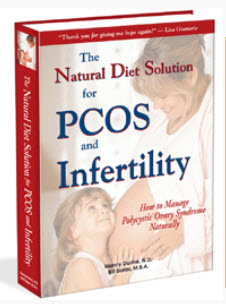
You can also review Chapter 14.3 "Emotional Factors" in this PCOS diet e-book to get some ideas.
What Is Hirsutism?
Abnormal hair growth affects 5-10% of all women and a much higher percentage of women with PCOS. Women of European ancestry have higher rates than women of African descent. Asian women have the lowest rate.
You may have hirsutism (excessive hair growth) if you have coarse, mature facial hair, hair on the chest, back or arms, or excessive pubic hair.
Because physical appearance has so much to do with how people relate to each other, uncontrollable hair growth can be a painful experience. Women may be chronically stressed by the amount of time and money they spend removing unwanted hair, to say nothing of the frustration of having it continually grow back.
What Causes It?
Interacting factors - hormonal, genetic, and lifestyle - combine to determine how much hair you have, and where it grows.
Hirsutism is thought to be mostly due to excessive levels of androgenic hormones. Examples of androgens are testosterone, androstenedione, and DHEA. Testosterone is the main androgen we're concerned about. It's normal for men to have a lot of testosterone and for women to have some. When women have too much testosterone, body and facial hair overgrowth may result.
But even if your androgens are normal, you may develop hair overgrowth because your body is overly sensitive to hormones. And some women who have normal androgens and don't have PCOS will develop excessive hair, sometimes for unknown reasons.
Your genes are a contributing factor. Your inherited genetic predisposition may incline your metabolism towards creating conditions favoring the growth of unwanted hair.
However, what you eat, whether you exercise, how well you sleep, how you manage stress, and the pollutants you are exposed to directly influence what your genes do. So your facial and body hair growth is partially under your control.
There are basically two ways to handle this problem.
- You can physically remove or destroy the unwanted hair, or
- You can reduce the androgen and related hormone imbalances that are causing the hair to grow.
Weird Case of Hair Growth in the Mouth
We have discovered a case of hirsutism inside the mouth. This woman had black hairs similar to nasal hair that appeared in the lining of her mouth. The presence of this hair is what led to a diagnosis of polycystic ovary syndrome.
It's rare for hair follicles to develop inside the mouth. But this case illustrates the power of androgenic hormones (such as testosterone) in your body. It also illustrates the point that hair can grow almost anywhere on your body.
If you have hair growing in place where it shouldn't, you are not a freak. It is only a hormonal imbalance that you can take steps to correct. When you take the corrective steps, the inappropriate hair growth should diminish.
Your diet is a huge corrective step you can take.
Some women appear to get results with saw palmetto while others get results with a combination of saw palmetto, vitex, and d-pinitol.
Related Articles
- Helpful Natural Treatments and Diet
- Nutritional Supplements for Better Control
- Other Causes of Excessive Hair Growth
- Can Drugs Reduce Hair Growth?
- How to Remove Unwanted Hair
- Laser and IPL Therapy
Sources:
Ekback M et al, "It is always on my mind": women's experiences of their bodies when living with hirsutism, Health Care Women Int. 2009 May;30(5):358-72
Femiano F et al, An unusual case of oral hirsutism in a patient with polycystic ovarian syndrome, Oral Surg Oral Med Oral Pathol Oral Radiol Endod. 2009 Dec;108(6):e13-6


E-Books to Help You Manage PCOS
Get Answers to your Questions about
- Fertility
- Weight Control
- Hair Loss
- Stress
- Unwanted Hair
- Acne...and more!
FREE PCOS Report
and Newsletter

Your email is safe with us. We respect your privacy, and you may unsubscribe at any time.
Recent Articles


-
PCOS Long Journey to The Happy End
Apr 30, 18 07:24 PM
Hi Girls, Maybe my story will have one day a good end but I am not there yet. Until I was 31 years old I lived my dream, having lovely husband, good -
PCOS and Miscarriage
Apr 17, 18 04:03 PM
Proper diet and natural supplements can help the body maintain a pregnancy through successful delivery.
-
How to Deal with PCOS and Stress
Apr 04, 18 04:19 PM
Your body has a natural capacity to heal itself if you provide it with the necessary tools.