Synthetic Progestins and PCOS
Progestins are given to PCOS women in order to induce a period and to regulate the menstrual cycle. A progestin is a medication that mimics the action of progesterone.
Free PCOS Newsletter
Synthetic progestins (vs. progesterone) were developed with the advent of the birth control pill. The half-life (time it takes a compound, once in your body, to be reduced to half of its original amount) of natural progesterone is quite short and researchers were looking for an agent that would give a longer half-life and yet produce or mimic the effects of progesterone.
Progestins Not the Same as Progesterone
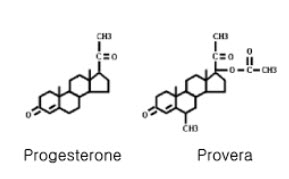
Since progestins are 10 to 100 times as potent, and have a longer half-life in your body than progesterone does, they were chosen, along with synthetic estrogen, for use in birth control pills. The uses for progestins have become more widespread since then, which includes their use -- on their own, or as part of birth control pills -- in conventional treatment plans for PCOS.
Synthetic progestins are literally analogs of the progesterone naturally produced in your body. In other words, they are “look alikes,” that have some similarities in form and function to true progesterone, but are not exactly the same. However, one thing is certain. They do not occur naturally in your body.
Different Types and Side Effects
Progestins are also called progestagens.
Common progestins are:
- Medroxyprogesterone acetate (MPA). Brand names: Provera, Cycrin, Curretab, Amen.
- Norethindrone acetate. Brand name: Aygestin.
Unfortunately, even a slight difference in the molecular configuration of a chemical compound, such as the difference between progestins and progesterone, can mean drastic differences to your body.
While hormone replacement with progesterone causes little, if any, negative effects, some of the potential side effects of synthetic progestins include:
- Cardiovascular complications
- Suspected links to uterine and breast cancer
- Blood clots
- Insomnia
- Menstrual irregularities
- Depression
- Masculinizing effects
- Breast tenderness
- Fluid retention
- Edema.
Because of the potential side effects synthetic progestins can cause in your body, using bioidentical hormone replacement in the form of natural progesterone may be a safer way to achieve the positive effects you're looking for.
In some women with polycystic ovarian syndrome, estrogen levels are not sufficient for the progestin to have an effect. In order for a progestin to be effective, the uterus must first be "primed" with estrogen. If a progestin alone does not induce bleeding, a program first using estrogen to cause the endometrial lining of the uterus to proliferate and then giving a progestin to mature the lining may be attempted. The estrogen procedure may not be required in other PCOS women, since they are already estrogen dominant.
Occasionally, progestins may be used to partially suppress the ovary and regulate bleeding prior to the use of fertility drugs.
Benefits and Disadvantages of Progestins for PCOS
The main benefit of taking a progestin is that it may help to regulate uterine bleeding.
However, they do little to normalize hirsutism or hair loss, nor do they improve the fundamental metabolic abnormalities of polycystic ovary syndrome. Of course, they also have the side effects listed above.
Related Articles

E-Books to Help You Manage PCOS

Get Answers to your Questions about
- Fertility
- Weight Control
- Hair Loss
- Stress
- Unwanted Hair
- Acne...and more!
FREE PCOS Report
and Newsletter
Your email is safe with us. We respect your privacy, and you may unsubscribe at any time.
Recent Articles


-
PCOS Long Journey to The Happy End
Apr 30, 18 07:24 PM
Hi Girls, Maybe my story will have one day a good end but I am not there yet. Until I was 31 years old I lived my dream, having lovely husband, good -
PCOS and Miscarriage
Apr 17, 18 04:03 PM
Proper diet and natural supplements can help the body maintain a pregnancy through successful delivery.
-
How to Deal with PCOS and Stress
Apr 04, 18 04:19 PM
Your body has a natural capacity to heal itself if you provide it with the necessary tools.