Are You Playing PCOS Genetic Russian Roulette -- for You and Your Future Daughter?
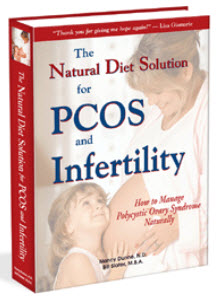
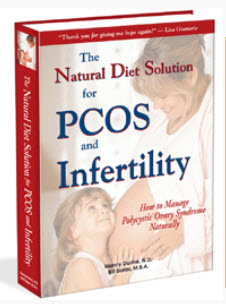
In this PCOS diet ebook, the authors are strict about their recommendations.
For example, they tell you to avoid manufactured, refined "convenience" foods, to stay away from soft drinks, etc. They ask you to consume organic, fresh produce. They ask you to eat hormone-free or free-range animal protein
Free PCOS Newsletter
They've received complaints that the diet is too strict, too expensive, plus it's hard to find the high-quality foods that are recommend.
So why would they create such a "difficult" diet for you to follow?
They could have made it a lot easier and a lot more convenient. But they didn't. Here's why.
What Your Genes Do Will Affect PCOS
It's because of your "genome" and your "epigenome". Your genome is the total collection of your genes that tell your body what to do. Your epigenome is the collection of all the environmental factors that cause your genome to behave in one way or another.
If you can visualize your body as a computer, your genome is the computer's "hardware". But the hardware cannot run unless it has software.
The "software" for your genome is your epigenome.
If you have "bugs" in your software or the software is badly designed, your body's hardware will run these defective programs and produce undesirable results in your body, such as the various symptoms of polycystic ovary syndrome.
You've heard the computer term "garbage in, garbage out". If you run a garbage software program on your computer, you will get a garbage result. The same is true for your body's genome. Garbage in, garbage out.
However, the terms "genome" and "epigenome" are probably quite unfamiliar to you. If you can begin to understand the significance of these terms, you will have taken a huge step toward gaining better control over your health.
Epigenome Explained
So stop reading this article right now. Click the image below to watch a 6 minute presentation of what an epigenome is. The title of the presentation by Dr. Dana Dolinoy is "A Tale of Two Mice". We recommend that you watch it twice to make sure you understand it.
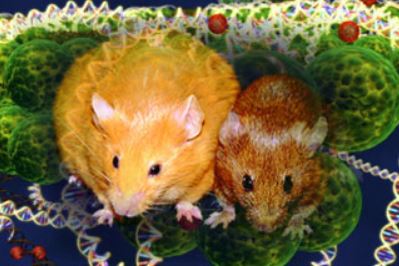
This is what the presentation is telling you:
- Everything you are exposed to in your environment (including the food you eat) influences how your genome behaves.
- Your epigenome greatly influences your health outcomes, the health outcomes of your children, and the health outcomes of your grandchildren.
Healthy PCOS Diet Improves Epigenome
What you eat and drink is a big part of your epigenome. The diet and other recommendations in our book are designed to help you improve your epigenome so that:
- Your PCOS symptoms will diminish, your risk of developing degenerative diseases will be reduced, and your overall health will improve.
- Your future children will be less likely to develop degenerative diseases.
- Your children's children will be less likely to develop degenerative diseases.
If you ignore your epigenome and live an unhealthy lifestyle and do not take steps to minimize your exposure to undesirable environmental factors, you are playing genetic Russian Roulette with yourself, your future children, and their children.
We receive dozens of inquiries from distraught or concerned mothers of daughters with polycystic ovary syndrome. An additional concern is that the daughters of the daughters will also develop PCOS. How can this chain be broken?
One possible way to break the chain is for every future mother to improve her epigenome before she conceives. This is why the information in this ebook can be very important. It describes some of the things you can do to improve your epigenome.
Are You "Programming" Your Future Daughter for PCOS?
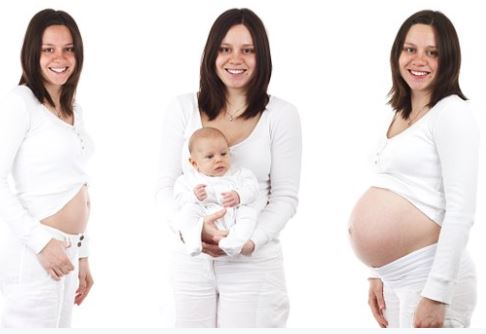
PCOS is a disorder characterized by excessive male hormones (androgens), polycystic ovaries, lack of ovulation, insulin resistance and possibly abdominal obesity. Although noticeable during adolescence, emerging data suggests that polycystic ovary syndrome may originate in the womb.
According to a recent study from the University of Ioannina in Greece, a combination of genetic and environmental factors appear to cause the female fetus to be exposed to excessive levels of male hormones. Consequently, some of the growing fetal tissues become "programmed" or predisposed toward the development of polycystic ovary syndrome problems in adult life.
Evidence from experimental, clinical and genetic research supporting the hypothesis for the fetal origins of PCOS was reviewed in this study. For example, female primates exposed to excess androgen in the womb exhibit the features of PCOS during adult life.
Clinical observations also support a potential fetal origin of polycystic ovary sundrome. Women with congential fetal androgen excess disorders develop features characteristic of polycystic ovarian syndrome during adulthood despite the normalization of androgens excess after birth.
Genetic studies indicate that variants of genes regulating the activity or availability of androgens to target tissues are associated with polycystic ovary syndrome and increased androgen levels. These gene variants may provide the genetic link to prenatal androgenization in this disease.
However, as we discuss in our e-book, the expression of genes is strongly influenced by environmental factors such as diet, exercise, environmental pollution and chronic stress.
As a PCOS mother of your future daughter, your genes and health habits will program or influence the tissues of the developing fetus and thus influence whether she will develop symptoms of polycystic ovary syndrome in future years.
You can't control the genes that your daughter inherits from you. But you may be able to favorably influence the future behavior of those genes in her body. You can do this by eating an exceptionally healthy diet, getting plenty of exercise, controlling chronic stress, avoiding recreational drugs and tobacco, and minimizing exposure to all environmental chemicals such as pesticides. Ideally, these measures should be taken before you conceive so that your own genes and maternal environment are able to provide the healthiest environment for your developing fetus.
Sources:
Xita N et al, Fetal Programming of Polycystic Ovary Syndrome by Androgen Excess: Evidence from Experimental, Clinical and Genetic Association Studies, J Clin Endocrinol Metab. 2006 Mar 7; [Epub ahead of print]
Abbott DH, et al, Contributions of androgen and estrogen to fetal programming of ovarian dysfunction, Reprod Biol Endocrinol. 2006 Apr 10;4(1):17
Jirtle RL et al Environmental epigenomics and disease susceptibility, Nat Rev Genet. 2007 Apr;8(4):253-62
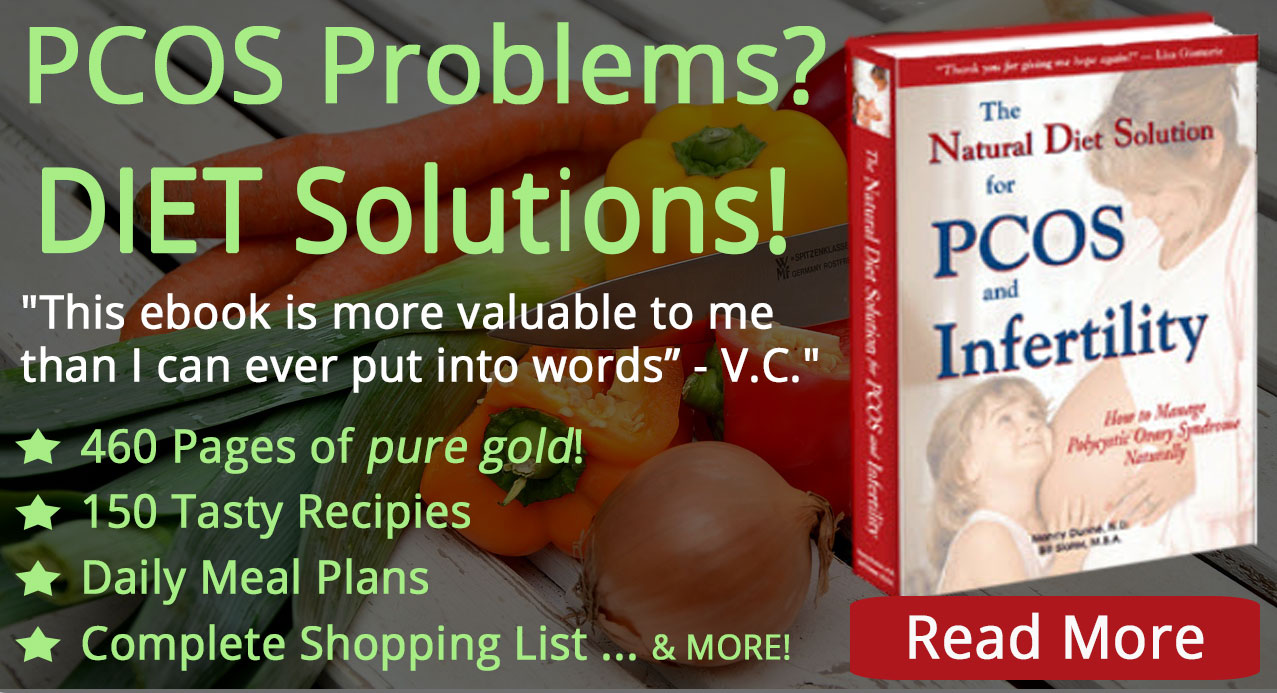

E-Books to Help You Manage PCOS
Get Answers to your Questions about
- Fertility
- Weight Control
- Hair Loss
- Stress
- Unwanted Hair
- Acne...and more!
FREE PCOS Report
and Newsletter
Your email is safe with us. We respect your privacy, and you may unsubscribe at any time.
Recent Articles


-
PCOS Long Journey to The Happy End
Apr 30, 18 07:24 PM
Hi Girls, Maybe my story will have one day a good end but I am not there yet. Until I was 31 years old I lived my dream, having lovely husband, good -
PCOS and Miscarriage
Apr 17, 18 04:03 PM
Proper diet and natural supplements can help the body maintain a pregnancy through successful delivery.
-
How to Deal with PCOS and Stress
Apr 04, 18 04:19 PM
Your body has a natural capacity to heal itself if you provide it with the necessary tools.