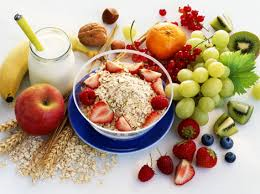
PCOS, Diet, Inflammation and Weight Gain Are All Connected
What you eat and how much you eat affects a lot more than your weight. What you eat can either stimulate inflammation, or inhibit inflammation. An unhealthy diet consisting of lots of fat, refined carbohydrates and highly processed foods is not a good idea if you intend to control PCOS.
Free PCOS Newsletter
Refined Carbohydrates and Sugar a Root Cause of PCOS
A diet that is high in refined carbohydrates and low in fiber can lead to excessive levels of glucose ("blood sugar") in the blood. This condition is called "hyperglycemia".
A number of studies have shown that hyperglycemia leads to inflammation. For example, in a study at the Schwartz Center for Metabolism and Nutrition at Case Western University, PCOS women consuming glucose caused immune cells to produce free radicals that caused an inflammatory response. The researchers suggested that the inflammatory response induces insulin resistance and hyperandrogenism (high levels of male hormones) in PCOS women. In this study, it didn't matter whether the women were lean or overweight. In either case, the inflammatory response occurred.
Hyperglycemia (high blood sugar) also appears to increase TNF-alpha, an inflammatory biochemical that can contribute to insulin resistance, especially in lean PCOS women who have some abdominal fat.
Saturated Fats and Trans-Fats Bad for PCOS
A diet high in saturated fat is linked to an elevated CRP level. It also induces inflammatory activity and impairs insulin signaling in the hypothalamus gland, which is your "control center" for energy balance and weight management. In other words, a high-fat diet induces insulin resistance, increases inflammation and interferes with the ability of your hypothalamus gland to balance your weight.
Consumption of trans-fats has also been shown to increase inflammation. Trans-fats are artificially created saturated fats.
We have an extended discussion of fats and trans fats in this ebook.
A Healthy Diet Reduces Inflammation and Weight
A healthy diet consisting mostly of unrefined foods is the most effective way to reduce inflammation and manage weight. It also reduces insulin resistance, which reduces the tendency for hyperandrogenism (excessive male hormones), relieves various PCOS symptoms, and improves fertility.
Fiber.
Higher consumption of dietary fiber, as found in vegetables, fruits and legumes reduces inflammation.
Omega-3 Essential Fats.
Fats can directly influence production of leptin, resistin and adiponectin, so the amount and type of fat you consume is important for controlling inflammation and normalizing your hormones. As discussed in our ebook, foods containing omega-3 fatty acids reduce inflammation.
"Phyto-nutrients" in Vegetables and Fruit.
Plant compounds, such as anthocyanins and bioflavonoids, generally reduce inflammation and encourage the production of anti-inflammatory adiponectin. Plant pigments such as carotenoids also tend to dampen inflammation. The antioxidants and other "phyto-nutrients" and materials found in healthy foods play an absolutely crucial role in controlling inflammation.
The advantage of a healthy diet was borne out by a trial conducted at the Second University of Naples in Italy. Half of the 120 women were put on a "Mediterranean-style" diet rich in vegetables, fruits and omega-3 fats. The other half were put on a "prudent diet" similar to the one recommended by the American Heart Association.
Not designed for weight-loss, both diets supplied over 2000 calories a day, which approximates what an average American woman consumes. Although both groups of women lost weight, the women on the Mediterranean diet lost significantly more weight and body mass than those on the "prudent diet."
Even more importantly, the Mediterranean diet group saw significant reductions in key indicators of inflammation. The Mediterranean diet women also had a rise in their adiponectin levels and improvement in their insulin sensitivity.
There's little question that a healthier, high-quality diet will help to reduce inflammation in women with PCOS.
Destructive Cycle of Diet, Inflammation and Weight
The relationship of diet, inflammation and weight is summarized here:
- A diet high in refined carbohydrates and other "fabricated" foods leads to both increased weight and increased inflammation.
- Excess weight itself causes chronic inflammation.
- Chronic inflammation contributes to more insulin resistance, leptin resistance, and other metabolic disorders. It also decreases favorable adiponectin and increases unfavorable resistin.
- Insulin resistance and leptin resistance stimulate accumulation of more weight, make weight loss more difficult, and induce hyperandrogenism (excessive levels of male hormones) and other symptoms of PCOS.
- The added weight induces more inflammation and thus more insulin and leptin resistance, which in turn prevents you from burning off fat stores, and causes you to store even more fat.
Here is the vicious cycle of obesity and leptin resistance: Extra fat produces chronic, low-grade inflammation. The chronic inflammation produces a chronic anti-inflammatory response, led by SOCS molecules. The SOCS response stops leptin from reducing obesity. So weight goes up, which causes more inflammation. And the cycle starts all over again.
How to Break the Diet-Inflammation-Overweight Vicious Cycle
You can break this vicious cycle with three simple actions:
- Eat a healthy diet as described in The Natural Diet Solution to PCOS and Infertility ebook
- Get regular exercise.
- Remove or control sources of chronic stress.
See Related Articles
- Diet and Inflammation
- Is Inflammation Inherited?
- Are You Starved for Oxygen?
- What Causes Inflammation?
- Is This a Hidden Cause of PCOS?
Sources:
Sonnenberg, L et al, Dietary patterns and the metabolic syndrome in obese and non-obese Framingham women, Obes Res. 2005 Jan;13(1):153-62.
Gonzalez, F et al, Reactive oxygen species-induced oxidative stress in the development of insulin resistance and hyperandrogenism in polycystic ovary syndrome, J Clin Endocrinol Metab. 2005 Oct 25; [Epub ahead of print]
Gonzalez, F et al, Hyperglycemia alters tumor necrosis factor-alpha release from mononuclear cells in women with polycystic ovary syndrome, J Clin Endocrinol Metab. 2005 Sep;90(9):5336-42
King, DE et al, Relation of dietary fat and fiber to elevation of C-reactive protein, Am J Cardiol. 2003 Dec 1;92(11):1335-9
De Souza, CT et al, Consumption of a fat-rich diet activates a proinflammatory response and induces insulin resistance in the hypothalamus, Endocrinology. 2005 Oct;146(10):4192-9
Mozaffarian, D et al, Dietary intake of trans fatty acids and systemic inflammation in women. Am J Clin Nutr. 2004 Apr;79(4):606-12
Lopez-Garcia, E et al, Consumption of trans fatty acids is related to plasma biomarkers of inflammation and endothelial dysfunction. J Nutr. 2005 Mar;135(3):562-6
Ajani, UA et al, Dietary fiber and C-reactive protein: findings from national health and nutrition examination survey data. J Nutr. 2004 May;134(5):1181-5.
Drevon, CA, Fatty acids and expression of adipokines, Biochim Biophys Acta. 2005 May 30;1740(2):287-92
Lopez-Garcia, E et al, Consumption of (n-3) fatty acids is related to plasma biomarkers of inflammation and endothelial activation in women. J Nutr. 2004 Jul;134(7):1806-11.
Tsuda, T et ai, Anthocyanin enhances adipocytokine secretion and adipocyte-specific gene expression in isolated rat adipocytes. Biochem Biophys Res Commun. 2004 Mar 26;316(1):149-57.
Walston, J et al, Serum Antioxidants, Inflammation, and Total Mortality in Older Women, Am J Epidemiol. 2005 Nov 23; [Epub ahead of print]
van Herpen-Broekmans, WM et al, Serum carotenoids and vitamins in relation to markers of endothelial function and inflammation. Eur J Epidemiol. 2004;19(10):915-21
Esposito, K et al, Effect of a mediterranean-style diet on endothelial dysfunction and markers of vascular inflammation in the metabolic syndrome: a randomized trial. JAMA. 2004 Sep 22;292(12):1440-6

E-Books to Help You Manage PCOS
Get Answers to your Questions about
- Fertility
- Weight Control
- Hair Loss
- Stress
- Unwanted Hair
- Acne...and more!
FREE PCOS Report
and Newsletter
Your email is safe with us. We respect your privacy, and you may unsubscribe at any time.
Recent Articles


-
PCOS Long Journey to The Happy End
Apr 30, 18 07:24 PM
Hi Girls, Maybe my story will have one day a good end but I am not there yet. Until I was 31 years old I lived my dream, having lovely husband, good -
PCOS and Miscarriage
Apr 17, 18 04:03 PM
Proper diet and natural supplements can help the body maintain a pregnancy through successful delivery.
-
How to Deal with PCOS and Stress
Apr 04, 18 04:19 PM
Your body has a natural capacity to heal itself if you provide it with the necessary tools.