PCOS Review Newsletter #78

A free health newsletter for women with polycystic ovary syndrome or polycystic ovaries.

Issue #078      April7, 2009 Bill Slater, Research Associate


TABLE OF CONTENTS

1) High Intake of Red Meat Is Unhealthy

2) Vitamin B12 and Metformin

3) Editor Apologizes for IVF Remarks


1) High Intake of Red Meat Is Unhealthy

Eating a lot of red meat from animals that are commercially-raised and feedlot "finished" from agribusiness producers is not a great idea.

You may have heard the news lately about a single new study which concludes that eating the highest amounts of red meat and processed meats is associated with modest increases in deaths from cancer, heart disease or any other cause.

This study has many flaws, the most important one being that it does not separate "red meat" from "processed meats". The two have a lot in common. Both are animal protein pretty much saturated with chemicals that range from environmental pollution to hormone and drug residues.

The processed meats also have preservatives and artificial colors, as well as sweeteners and added salt.

Neither of these is safe to eat. If these animal protein products are the only type of meat available to you, you should indeed eliminate all processed meats and eat "red meat" not more often than once a week, as the study authors advise.

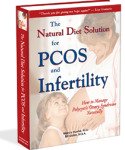
If you're a reader of our PCOS Diet book, maybe you're wondering if we made a mistake by including red meat in our diet. A couple of people have told us they think they are eating too much meat on our recommended diet for PCOS.

What's going on? After all, we suggest that you consume animal proteins such as meat and not eat refined carbohydrates such as bread. Some think we offer a "low carb" diet, high protein diet.

This is not quite correct. We do request that you change your carbs, mainly by increasing the amount of vegetables and decreasing grains.

It's preferable that you have at least five servings of vegetables every single day. By consuming five servings of whole vegetables (and some fruit), you will be getting all the vitamin, mineral and fiber nutrition you need to maximize your health.

We recommend that you eat clean, lean animal protein in amounts that are appropriate to help you recover from the effects of a poor diet and PCOS. Clean, lean animal protein is required for your long term well being; there is no substitute.

We want you to be picky about meats. Unfortunately this study gives us no new information about the health effects of eating optimal amounts of lean, chemical-free meats from grass fed and organically raised animals, meaning beef and lamb as well as bison, poultry, eggs and especially fish.

There are no processed meats in our PCOS diet at all. We prefer that you look for organic meats or range-fed meats that are lower in saturated fat and chemical residues. Or even wild game. Yes, it's more expensive. But these meats are simply superior and healthier compared to the average meat in your market.

Until we see some well designed studies on populations of people who eat high quality meats, we have to be careful not to paint those foods with the same brush.

It matters that you not eat foods that are full of toxic preservatives and colorings or hormone and antibiotic residues, whenever you have a choice. And that goes for plant foods as well!

The common sense bottom line is this: too much saturated fat is bad for you. It's where the toxins in the animal are stored.

So, remove all visible fat before cooking. If you cannot buy organically-raised food, visit www.ewg.org. The Environmental Working Group publishes lists of the most toxic and the least toxic food items that end up in your grocery store, including ocean fish.

Source:
Sinha R et al, Meat intake and mortality: a prospective study of over half a million people, Arch Intern Med. 2009 Mar 23;169(6):562-71


2) Vitamin B12 and Metformin

This article is the unintended byproduct of some other research we were doing. We were looking at some new research of couples visiting an in vitro fertilization clinic in Israel. 43% of the couples were found to have one partner who had a vitamin B12 deficiency, more common in men (35%%) than women (23%). That's a very high percentage! It could be that B12 deficiency contributes to a couple's infertility.

We spotted another report, from Trinity College in Ireland, showing that the women who had the lowest vitamin B12 levels had a 2-3 times increased risk of neural tube defects (such as spina bifida) in their babies.

And since so many of you are taking metformin (Glucophage) to treat your PCOS, we decided to re-explore the possible relationship between metformin and B12 problems.

Unfortunately, there doesn't appear to be much interest in how vitamin B12 is affected by metformin, since there isn't much published research on this topic. But the research that exists indicates that people who take metformin have diminished B12 absorption and lower B12 levels.

To the extent that metformin makes it more difficult to absorb vitamin B12 from your food and reduces your vitamin B12 levels, you could develop a problem since B12 is so important for many functions in your body, including the creation of a healthy baby.

If you're on metformin therapy, consider supplemental vitamin B12. This would be especially appropriate if you are a vegetarian, since most dietary B12 comes from animal products.

You can also take supplemental calcium, which can aid in the absorption of vitamin B12 according to a study at Mount Sinai School of Medicine.

Calcium is also helpful for weight loss and other health issues you may be dealing with. However, we recommend that you take magnesium if you are taking calcium.

A high-quality, high-potency multi-vitamin/mineral is an easy way to get supplemental B12, calcium, and magnesium. A multi has the full B-complex of vitamins, which can be helpful if you have insulin resistance or are taking birth control pills. It will also contain vitamin D, which is very important for women with PCOS. Zinc and chromium are two minerals in a multi that help to reduce insulin resistance, which is a fundamental problem for the majority of women with polycystic ovary syndrome.

Sources:
Pront R et al, Prevalence of low serum cobalamin in infertile couples, Andrologia. 2009 Feb;41(1):46-50
Molloy AM et al, Maternal vitamin B12 status and risk of neural tube defects in a population with high neural tube defect prevalence and no folic Acid fortification, Pediatrics. 2009 Mar;123(3):917-23
Ting RZ et al, Risk factors of vitamin B(12) deficiency in patients receiving metformin, Arch Intern Med. 2006 Oct 9;166(18):1975-9
Bauman WA et al, Increased intake of calcium reverses vitamin B12 malabsorption induced by metformin, Diabetes Care. 2000 Sep;23(9):1227-31


3) Editor Apologizes for IVF Remarks

I apologize for failing to communicate clearly with you in the "Genetic Risks of IVF" article in our last newsletter.

Two women who had had successful pregnancies with IVF (in vitro fertilization) were deeply offended by what I said. The impression I had from their emails was that I was dismissing the value of IVF, I was critical of its cost, and anybody in their right mind should do something else instead.

That is NOT what I intended to convey. What I had tried to say was that there are other things you can try before turning to IVF. Whether you try them or not is of course your very personal choice.

I don't question that IVF has made many thousands of pregnancies possible. Perhaps you are one of those success stories. If so, I applaud your choice to use IVF and you have my sincere best wishes for your wonderful and healthy family.

As for the genetic risks, in my view that is a judgment call between you and your doctor. I was only reporting that this topic was in the news lately.

I have the utmost respect for each of you and would never intentionally be insulting to you.

-- Bill Slater


Thought for Today: "I would be a fool to deny my own abilities." -- Julie Andrews

PCOS Health Review

This free newsletter gives you original and immediately usable information to help you deal with PCOS.

Get the latest research, tips for improving your health, answers to questions, success stories, and more!

Your Name:
Your Email:

Your e-mail address is totally secure. We will never misuse or sell your information.