Hirsutism + PCOS. Can Laser Treatment Help?
Laser hair removal is newer than electrolysis. It's another method for PCOS women to treat hirsutism (unwanted hair growth).
Lasers use a special light wave that is absorbed by dark hairs and damages the hair follicle. Laser therapies have not been in use long enough for hirsutism to fully determine how permanent the hair destruction is.
Laser treatment should not be used by dark-skinned women and is less effective with blond, red or white hair. Light-skinned women with dark hair get the best results.
Free PCOS Newsletter
Laser treatment is useful for large areas of hair.
Most types of laser hair removal are considered safe if performed properly. However, recent studies suggest other skin structures can be adversely affected by laser irradiation and no one yet knows what the long-term consequences are. Hair re-growth may occur in some women.
Laser Treatment Reduces Hair Problems in PCOS Women
Excessive facial and body hair growth is one of the characteristic features of polycystic ovary syndrome that can lead to high levels of depression and anxiety.
A recent study conducted at the Royal Free and University College Medical School in London, England, used laser therapy on 88 women with facial hirsutism due to PCOS. They were given five laser treatments over a six-month period.
The women were divided into two groups. One group received high-energy laser treatment while the other group received low-energy treatment. The study found that the women receiving high-energy laser treatments had the best results.
Severity of facial hair in the high-energy group fell from a rating of 7.3 to a rating of 3.6. In contrast, the low-energy group had a minor improvement from 7.1 to 6.1.
Time spent on hair removal declined from 112 to 21 minutes per week in the high-energy group and from 92 to 56 minutes in the low energy group,
Depression scores fell from 6.7 to 3.6 in the high-energy group, compared with 6.1 to 5.4 in the low-energy group. A similar change was seen for anxiety scores. Psychological quality of life also improved more in the high-energy group, from 49.6 to 61.2 vs. 50.1 to 51.5 in the low-energy group.
The researchers concluded that laser treatment reduced the severity of facial hair and time spent on hair removal as well as alleviating depression and anxiety in women with PCOS. These findings suggest that ways of making this method of hair removal more widely available to women with facial hirsutism should be considered.
The most appropriate laser treatment for you is a technical issue that requires a consultation with your dermatologist or personal physician.
Multiple Laser Treatments for Excess Hair
In a recent study from the Glasgow Royal Infirmary in the UK, it appears that women who receive a greater number of laser treatments for hair removal are more satisfied with the results.
The study assessed hair counts, hair-free intervals and satisfaction in 60 women with PCOS undergoing 3ms pulse duration alexandrite laser treatment.
After six treatments there was a moderate 31%-38% reduction in hair counts. The "hair-free interval" increased steadily with treatment, from 1.9 weeks after six treatments to 4.3 weeks after 10 treatments.
After 12 treatments, 31% of the women had a hair-free interval longer than 6 weeks compared to only 2.6% after six treatments. Overall, despite the low hair count reductions, 95% of the women were satisfied with treatment.
The researchers concluded; "In women with PCOS, laser treatment is associated with a poorer than expected reduction in hair counts and hair-free interval following treatment. However, offering more than six treatments does have additional benefits in terms of prolonging HFI and overall patient satisfaction with treatment is very high."
What this study suggests is that if you choose to do laser therapy, don't expect immediate results. A long series of laser treatments may be required for you to feel satisfied with the results.
Does Intense Pulsed Light Therapy Work for PCOS-Related Hirsutism?
What is intense light (IPL) therapy?
IPL is the first photoepilation technology that treats unwanted hair safely on any skin type -- from very white to very black.
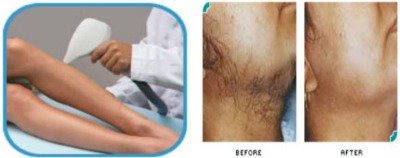
Highly controlled flashes of light are selectively absorbed by the pigment (melanin) located in the hair follicles lying below the surface of the skin. The absorbed light heats the hair, which damages or destroys the re-growth potential of the follicle. This significantly reduces the hair's ability to re-grow, and may result in permanent hair reduction over time.
What Happens During Treatment?
Treatment begins by trimming away the hair above the skin. You may be asked to wear dark glasses to protect your eyes from the bright light.
A cold gel (similar to ultrasound gel) may be spread over the treatment area.
The IPL unit is applied to your skin and pulses of light begin disabling your unwanted hair. Each pulse of light feels like a slight sting or pinch, similar to the snap of a rubber band. No local anesthesia is required and most peop0le tolerate the treatment well.
When the gel is removed, much of the hair is wiped off with it. The remaining hair in the treated area falls out over the next week or two.
Can All Hair Be Treated?
IPL treatment can be customized according to your hair color, texture and body location. Any hair with at least some pigment in it (black, brown, red and even blond) can be treated.
IPL is the first photoepilation procedure that appears to effectively treat unwanted hair on all skin types, including dark-skinned individuals such as those of Black, Hispanic or Asian descent.
The number of treatments required depends on several factors related to your specific kind of hair and skin.
Side Effects
Side effects are rare. You may experience some slight reddening or local swelling at the treatment site, but this typically goes away within a day. Rarely, there may be some minor blistering of the skin.
The skin can become darker or lighter following treatment but will generally return to normal within a few weeks.
Staying out of the sun will minimize the risk of complications.
Improve Laser Therapy for Excess Hair with Metformin
If you have PCOS and are taking metformin for insulin resistance -- and if you plan to use intense pulsed light therapy -- this research may interest you.
The Isfahan Endocrine and Metabolism Research Center in Iran conducted an experiment with 52 women who had hirsutism and polycystic ovary syndrome. They were given 5 laser therapy sessions over a span of 6 months.
The women were divided into two groups. One group was also given 1,500 mg. of metformin, while the other group was not.
Metformin is a pharmaceutical medication often prescribed for women with PCOS and who may have a condition called "insulin resistance".
In this study, the women who took metformin along with their laser hair removal therapy had better results in reducing their hirsutism than did the women who had laser therapy alone.
The takeaway from this study is that if you are going to use laser therapy, you can get better results if you also reduce your insulin resistance at the same time.
Metformin is one therapy to improve your insulin sensitivity. But if you don't want to deal with metformin's side effects, what else might you do?
You could utilize other methods for reducing insulin resistance, including a diet that reduces insulin resistance, more exercise, reduced stress, and selected nutritional supplements such as the d-pinitol formula. None of these methods have any side effects.
Related Articles
- What You Need to Know about Hirsutism
- Helpful Natural Treatments and Diet
- Nutritional Supplements for Better Control
- Other Causes of Excessive Hair Growth
- Can Drugs Reduce Hair Growth?
- How to Remove Unwanted Hair
Sources:
Rezvanian H et al, Increased Insulin Sensitivity by Metformin Enhances Intense-Pulsed-Light-Assisted Hair Removal in Patients with Polycystic Ovary Syndrome, Dermatology. 2009;218(3):231-6
McGill DJ et al, Laser hair removal in women with polycystic ovary syndrome, J Plast Reconstr Aesthet Surg. 2007;60(4):426-31
Clayton WJ et al, A randomized controlled trial of laser treatment among hirsute women with polycystic ovary syndrome, Br J Dermatol. 2005 May;152(5):986-92.


E-Books to Help You Manage PCOS
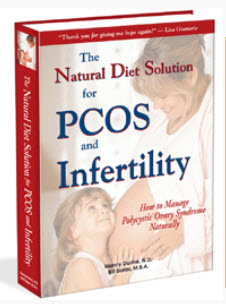
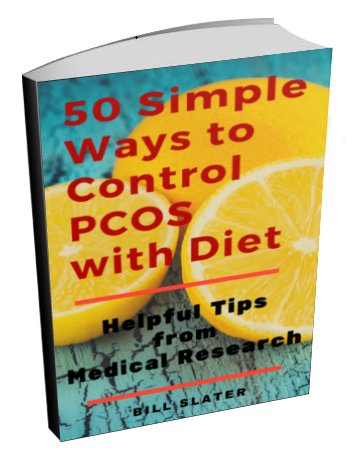
Get Answers to your Questions about
- Fertility
- Weight Control
- Hair Loss
- Stress
- Unwanted Hair
- Acne...and more!
FREE PCOS Report
and Newsletter
Your email is safe with us. We respect your privacy, and you may unsubscribe at any time.
Recent Articles


-
PCOS Long Journey to The Happy End
Apr 30, 18 07:24 PM
Hi Girls, Maybe my story will have one day a good end but I am not there yet. Until I was 31 years old I lived my dream, having lovely husband, good -
PCOS and Miscarriage
Apr 17, 18 04:03 PM
Proper diet and natural supplements can help the body maintain a pregnancy through successful delivery.
-
How to Deal with PCOS and Stress
Apr 04, 18 04:19 PM
Your body has a natural capacity to heal itself if you provide it with the necessary tools.